Creating Matches Beyond Expectations: The True Value of 360° Recruiting
- Consultant Interviews
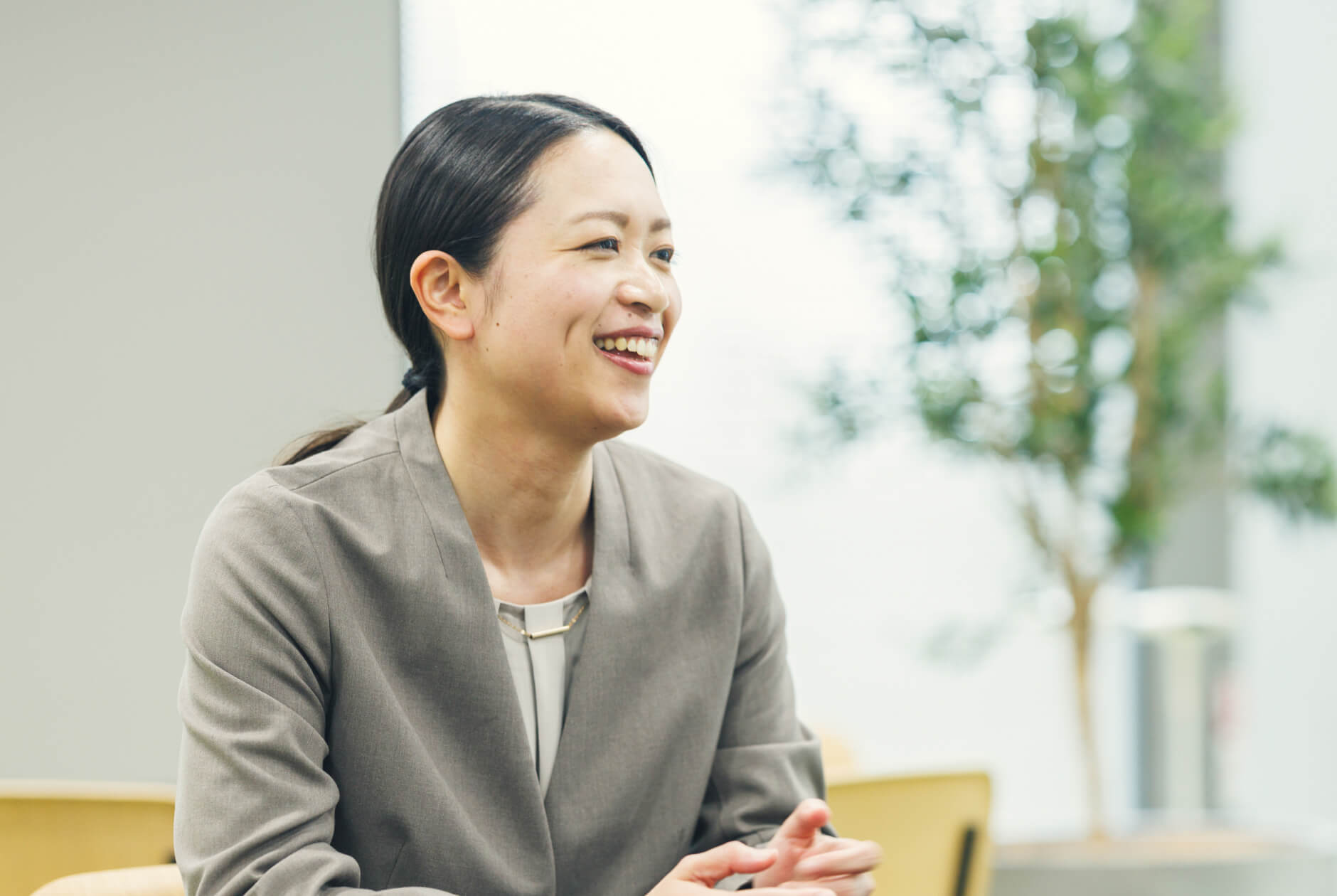
360 degree recruiting is one of our core strengths. In this series, we introduce how our consultants, who work closely with both clients and candidates, deliver value through their services.
In this interview, we speak with Yoshiko Osamura from the Business and Post Consulting Team. Known for her ability to build strong relationships with both clients and candidates, Yoshiko consistently delivers thoughtful and effective matches. We take a closer look at what shapes her approach.
Yoshiko Osamura
Senior Consultant, Business and Post Consulting Team
Yoshiko joined RGF Professional Recruitment Japan in 2021. Since then, she has specialised in business consulting, developing a deep understanding of clients’ business needs and identifying and unlocking candidates’ strengths and potential. Through this approach, she delivers optimal matches for both clients and candidates.
To start, could you tell us about your area of focus and the types of roles you work on?
I specialize in the business consulting domain. Positions within consulting firms are generally divided into industry-focused roles and function or solution-based roles. Our team operates across both, which allows us to offer a wide range of solutions.
Recently, I have been supporting roles in areas such as forensic investigations and corporate functions. In addition to this, I cover a broad spectrum of positions and also focus on regional offices outside Tokyo, including Nagoya, Osaka, and Fukuoka.
You seem to take a very hands on and thoughtful approach with both clients and candidates. Where does that come from?
Originally, I aspired to become a university researcher because I wanted to be directly involved in solving social issues. I studied urban planning and community development with a focus on extending healthy life expectancy. This interest was sparked when my grandmother became dependent on care, which led me to think deeply about what a society should look like where people can live long, healthy, and fulfilling lives.
Ultimately, I chose a career in recruitment rather than academia. The consulting industry plays a key role in addressing societal challenges, and I find great fulfilment in supporting talent who can contribute to this space.
We understand that you deliver high quality proposals to both clients and candidates. How do you approach this in practice?
There are two key aspects I focus on. The first is developing a deep understanding of the client. I go beyond the job description to explore the underlying business needs, why the role exists, and what the organisation is trying to achieve. Rather than simply matching candidates to roles, I aim to address organisational and business challenges through people.
To do this, I make a conscious effort to look beyond my immediate area and stay informed about broader societal trends. For example, I consider what kinds of consultants will be needed as technologies such as AI continue to evolve, and I work backwards from these societal changes to anticipate business needs.
The second is proactive engagement with both candidates and clients. For candidates, I work closely with them to clarify what they should emphasise in their CVs and how they should present their experience during interviews. For clients, I not only explain why a candidate is a strong fit based on the job description but also highlight additional strengths or perspectives that may not be explicitly outlined, including points the client may not yet have identified.

What kind of outcomes does this approach lead to? Is there a case that stands out to you?
One memorable case involved a candidate with strong expertise in AI, particularly in HR data utilisation. Despite having highly advanced skills, the candidate struggled to gain recognition during their job search and was rejected by multiple companies. By the time we met, they had lost confidence.
I reached out because I saw strong potential, even though there were no existing roles that matched their profile at the time. However, considering the broader societal issue of labour shortages driven by population decline, I believed their skill set would become increasingly valuable.
Based on that perspective, I introduced the candidate to several companies on a proposal basis. Eventually, a consulting firm recognised their potential and created a new position specifically for them, offering an opportunity as an investment in their capabilities.
At the end of the process, the candidate told me, “This was a job search that made me feel glad to be alive.” That moment has stayed with me.
I believe this outcome was possible because I continuously updated my understanding of my clients’ business needs and looked beyond existing roles to identify true potential.
Finally, what does a good match mean to you?
From the perspective of an agent’s value, a good match occurs when two elements align: a candidate who is unexpected from the client’s perspective, and a career opportunity that the candidate had not initially envisioned.
In addition, the candidate must feel confident and satisfied with their decision, while the client recognises the value of the individual and is committed to bringing them on board. Ultimately, a good match is one where both sides are satisfied and the placement leads to long term success.
Thank you very much.
This interview highlights Yoshiko’s strength in going beyond simple matching to create real value for both clients and candidates. By looking beyond immediate requirements and focusing on underlying potential, she is able to create matches that would not have otherwise happened. This consistent approach is likely one of the reasons she continues to build strong trust.
If you are looking to explore new career opportunities, or if your organisation is seeking new perspectives in hiring, we encourage you to get in touch.
▶ Explore Career Opportunities
https://www.rgf-professional.jp/career-consultation/
▶ Discuss Your Hiring Needs
https://www.rgf-professional.jp/contact/